Cat Body Language Cheat Sheet: Signals, Tails & Meows
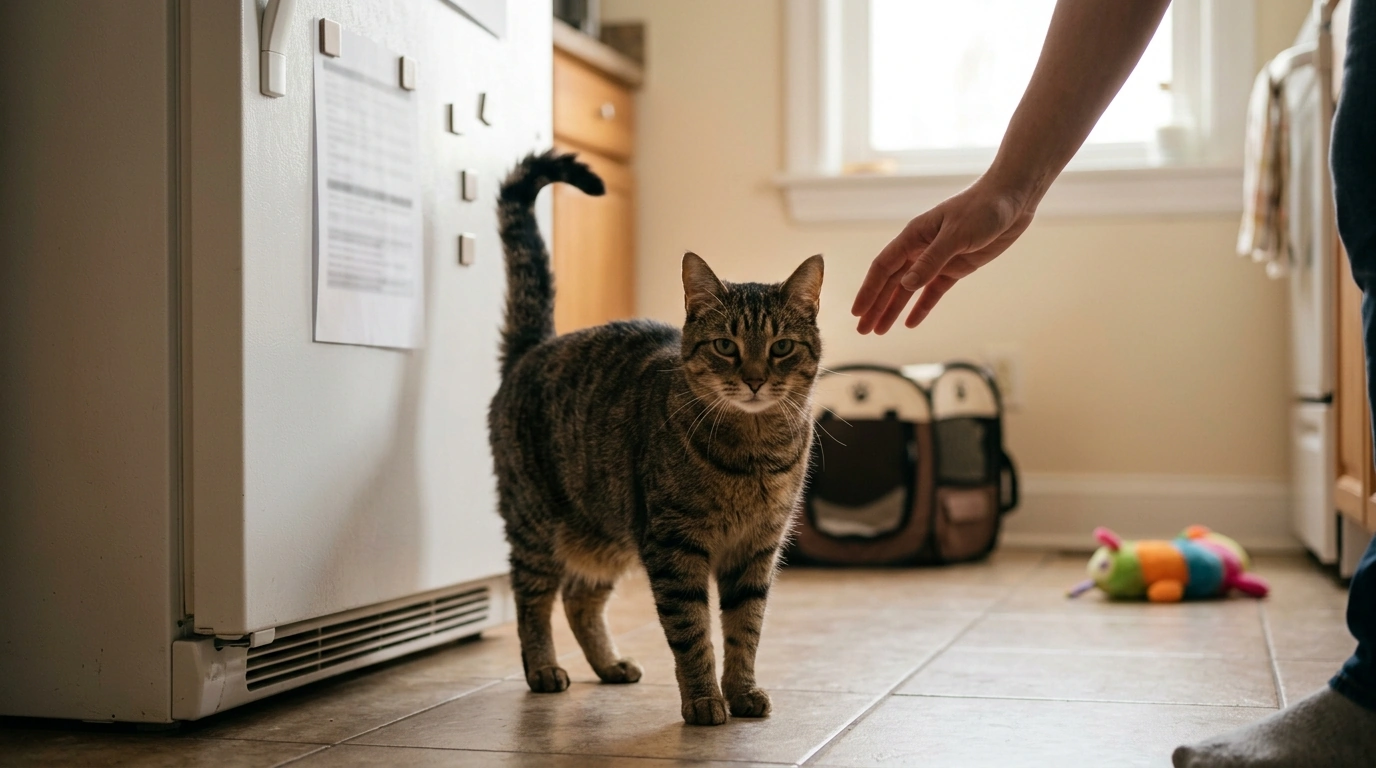
Cats communicate constantly through tail position, ear angles, eye shapes, posture, movement, and vocalizations. Learning these cues helps prevent bites and scratches, reduces stress, improves bonding, and supports smoother introductions with people and other pets. Use the guide below to read common signals, understand what they often mean, and choose a safe, respectful response—then reinforce learning with a printable reference that’s easy to keep on the fridge or near a carrier.
How cat communication works: reading the whole picture
Cat body language is best understood as a “bundle” of signals. One cue can be misleading; several cues together are far clearer. Start by checking ears, eyes, tail, overall posture, movement speed, and how much distance the cat wants.
- Look for clusters of signals (ears + eyes + tail + posture + distance) rather than one cue in isolation.
- Context changes meaning: the same meow can signal greeting, frustration, or pain depending on body posture and what’s happening.
- Distance matters: relaxed cats often close the gap; stressed cats often freeze, hide, or increase distance to assess.
- Timing matters: quick, twitchy movements suggest rising arousal; slow, loose movements suggest comfort.
- When unsure, choose the safest response: pause, give space, and keep things predictable.
Face and ears: the fastest window into mood
Before hands reach in, read the face. Ears and eyes often shift in a split second—especially when a cat is deciding whether to approach, tolerate contact, or bail.
- Ears forward and relaxed: interest, curiosity, and social openness.
- Ears sideways (“airplane ears”): uncertainty or overstimulation; slow down and lower intensity.
- Ears pinned back: fear or defensive aggression risk; stop reaching and make an escape route.
- Soft eyes and slow blinks: calm, friendly intent; returning a slow blink can communicate safety.
- Wide pupils can mean play excitement, fear, or pain—pair with body tension and movement to interpret.
- Whiskers forward: focused interest (toy, prey, treat). Whiskers pulled back: stress or caution.
For deeper behavior guidance, see resources from Cornell University’s Feline Health Center and the American Veterinary Medical Association.
Tail and body posture: confidence vs. conflict signals
The tail is a volume knob for arousal, while the body shows whether the cat feels safe, cornered, playful, or defensive. Watch for “loose and curvy” versus “stiff and braced.”
- Tail upright with a relaxed tip: greeting and social confidence; often safe to interact.
- Tail puffed: fear and high arousal; reduce triggers (noise, crowding) and give space.
- Tail lashing or thumping: agitation; end petting or pause play before it escalates.
- Loose, curved body and side-lying rest: comfort; let the cat choose contact.
- Crouched body, tucked paws, weight shifted back: fearful readiness to flee; avoid cornering.
- Arched back can be defensive fear or a neutral stretch—check for puffed fur, pinned ears, and stiffness.
Common signals at a glance
Use this quick-reference chart to match what you see with a practical, respectful response. If behavior is sudden or intense—or paired with hiding, appetite changes, litter box changes, or vocalizing at rest—consider a veterinary check.
| What you see | Common meaning | Best response |
|---|---|---|
| Slow blink, relaxed ears, loose posture | Comfort and trust | Blink back, speak softly, offer gentle contact only if the cat approaches |
| Ears sideways, pupils large, body low | Uncertainty or fear | Pause interaction, create space, avoid reaching over the head |
| Tail upright, tail tip quiver, rubs on legs | Friendly greeting / scent-marking | Allow rubbing, offer predictable affection, consider a short play session |
| Tail lashing, skin twitching, head turns toward hand while petting | Overstimulation | Stop petting, redirect with a toy, offer a calm break |
| Hissing, growling, ears pinned, body stiff | Defensive threat (fear-based) | Back away, give an escape route, reduce noise and traffic, avoid punishment |
| Belly exposed, paws ready, eyes alert | Not always an invitation for belly rubs | Offer chin/cheek scritches instead; use a toy for play |
| Chattering at birds, focused stare | Predatory excitement/frustration | Provide enrichment: window perch, puzzle feeder, wand play |
Meows, purrs, and other sounds: what they can indicate
Cat vocalizations are highly individual. Many adult cats “aim” most meows at humans, then refine what works over time (food meows, door meows, attention meows). Pair the sound with posture and breathing to interpret it.
Petting, play, and the “overstimulation” moment
Stress and comfort cues around the home
Behavior changes are often the earliest signal that something is “off,” whether it’s environmental stress, conflict with another pet, or a medical issue. The ASPCA’s cat behavior resources are a helpful primer for common household challenges.
Printable reference: when it helps most
Recommended printables (instant, fridge-friendly)
- Cat Body Language & Behavior Cheat Sheet (Printable)
- Enrichment Ideas for Indoor Cats (Printable Guide)
FAQ
Does a cat showing its belly mean it wants a belly rub?
Not necessarily. Belly exposure often signals trust, relaxation, or playful readiness, but many cats protect the abdomen and will grab or kick if touched; try cheek or chin scritches instead, or use a toy to play at a comfortable distance.
How can overstimulation during petting be recognized before a bite or scratch?
Look for early cues like tail flicking, skin twitching, ears rotating back, head turning toward your hand, and sudden body tension. Stop petting before the escalation, give a short break, and redirect energy to a toy.
When should unusual meowing or yowling be checked by a veterinarian?
Get it checked when vocalizing is sudden or escalating, happens at rest, or comes with changes in appetite, litter habits, hiding, weight loss, or breathing. Senior cats that begin night yowling also deserve prompt evaluation to rule out pain or cognitive changes.












Leave a comment